THE COMPLETE GUIDE
What is Pretotyping?
The proven methodology for validating product ideas in days, not months. Created at Google, taught at Stanford, trusted by enterprises worldwide.
"Leslie Barry is one of the world's leading pretotyping practitioners. He has trained thousands of innovators and helped enterprises save millions by testing ideas before building them."
DEFINITION
Pretotyping is a set of tools and techniques to validate any idea for a new product quickly and inexpensively by testing the initial appeal and actual usage of a potential new product before committing to building it.
The term combines "pretend" and "prototype" — you're testing whether people want your product before you invest in creating it. Created by Alberto Savoia at Google in 2010.
Pretotyping asks
Should we build it?
Validate demand with real customer data
Prototyping asks
Can we build it?
Test technical feasibility
Agile asks
How do we build it?
Iterative development process
Pretotyping is the missing first step before prototyping — ensuring you're building the right product before you invest in building it right. It's the core methodology behind rapid experimentation in enterprise settings.
THE PROBLEM
The Law of Market Failure
90%
of new products fail
70%
of startups fail
88%
of AI pilots never reach production
Most products don't fail because they were built poorly. They fail because nobody wanted them in the first place.
Alberto Savoia calls this "The Law of Market Failure" — and pretotyping is the antidote. By testing demand before building, you avoid wasting months or years on products that will never succeed.
ORIGIN STORY
Created at Google. Perfected at Stanford. Trusted Globally.
2010
Created at Google
Alberto Savoia, then Engineering Director at Google, develops pretotyping after seeing countless products fail despite being well-built.
2011
"Pretotype It" Published
The original book is released, introducing the methodology and the core pretotyping techniques. Get your free copy →
2012+
Taught at Stanford
Pretotyping becomes part of Stanford's entrepreneurship curriculum, reaching thousands of future founders.
2016
Enterprise Expansion Begins
Leslie Barry begins working with Alberto Savoia to scale pretotyping beyond startups into enterprise organisations. Together they develop training, tools, and infrastructure to help large companies adopt rapid experimentation at scale.
2017
Exponentially Founded
Leslie Barry launches Exponentially in Australia to bring pretotyping training and consulting to enterprise teams across Asia-Pacific.
2019
"The Right It" Published
Alberto's comprehensive follow-up book expands the methodology with new techniques and case studies. Leslie Barry contributes enterprise examples from Australian clients.
Today
Global Enterprise Adoption
Pretotyping is now used by Google, PEXA, AGL, Tabcorp, ANU, Lego, P&G, IKEA, and thousands of enterprises worldwide. Exponentially has trained 4,000+ innovators and helped enterprises save $30M+ by testing before building.
THE PROCESS
How Pretotyping Works
Pretotyping follows a scientific method. Instead of opinions and surveys, you gather real data about what customers actually do.
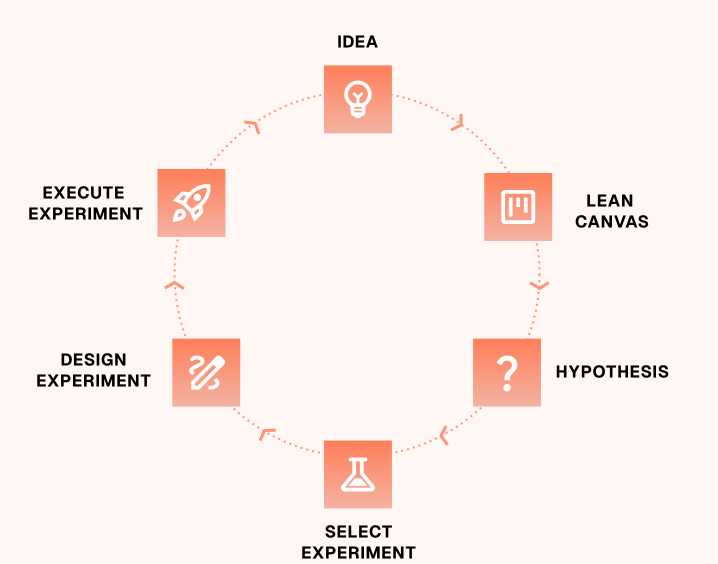
Form a Hypothesis
Turn your idea into a testable statement: "At least X% of Y will do Z"
Choose a Pretotype
Select from 10 methods to test your hypothesis quickly and cheaply
Run the Experiment
Get your pretotype in front of real customers and measure behavior
Analyze & Iterate
Did you hit your target? Refine, pivot, or proceed to prototyping
THE TOOLKIT
The 10 Pretotyping Methods
Each method tests a different aspect of market demand. Choose based on what you're trying to learn.
Fake Door
Test interest with a button or page for a product that doesn't exist yet
Mechanical Turk
Use humans to simulate automated functionality
Pinocchio
Create a non-functional version to test form and fit
Imposter
Rebrand an existing product to test new positioning
Infiltrator
Place your pretotype in an existing sales channel
Provincial
Test in a small market before scaling
One Night Stand
Offer your product for a very limited time
Façade
Create a front-end without the back-end
YouTube
Use video to demonstrate and gauge interest
MVP
Build the absolute minimum to test the core value
KEY DISTINCTION
Pretotyping vs Prototyping
| Aspect | Pretotyping | Prototyping |
|---|---|---|
| Core Question | "Should we build it?" | "Can we build it?" |
| Focus | Market demand & user behavior | Technical feasibility & UX |
| Timeline | Days to weeks | Weeks to months |
| Cost | $0 - $5,000 | $10,000 - $500,000+ |
| Data Source | Real customer behavior (YODA) | User testing & feedback |
| When to Use | Before deciding to build | After validating demand |
PROOF IT WORKS
Real Enterprise Case Studies
See how leading organisations have used pretotyping to save millions and find winning ideas.
Media / Press Coverage
Australian Financial Review
An Australian Financial Review feature article exploring how companies like RACQ, REA Group, and others are using pretotyping and rapid experimentation to test products before building them.
Energy
AGL
How AGL's Experimentation Team embedded pretotyping at scale, running 1000+ tests per year and saving over $7.5 million through rapid experimentation and data-driven decision making.
Education
Australian National University
How ANU used pretotyping and rapid experimentation to improve student experience, running 45 experiments over 12 weeks and validating a chatbot that served one sixth of students.
AI Innovation
Exponentially
An experiment in using ChatGPT voice mode as an AI interviewer to run a case study interview, producing a coherent narrative in half the usual editing time.
Property Technology
PEXA
How PEXA embedded pretotyping across all areas of the organisation, running 50 pretotypes in just 9 months and making [rapid experimentation](/rapid-experimentation) central to their innovation process.
Gambling & Entertainment
Regulated Enterprise
How Exponentially built an innovation engine inside a multi-billion-dollar regulated enterprise, running 130+ live experiments in 12 months with 8X ROI.
KEY CONCEPT
YODA vs OPD: Why Your Own Data Wins
YODA (Your Own Data)
Data you collect yourself from real customer behavior through pretotyping experiments.
- ✓ Real customer actions
- ✓ Specific to your product
- ✓ Current and relevant
- ✓ Skin in the game
OPD (Other People's Data)
Market research, surveys, focus groups, and industry reports.
- ✗ Opinions, not actions
- ✗ Generic to category
- ✗ Often outdated
- ✗ No commitment
WHAT CLIENTS SAY
Trusted by Enterprise Leaders
"We can pick out ideas that we know have a better chance of success, and we are able to reduce so much wasted investment. Think about all the costs that go into executing projects that don't end up delivering the outcomes that you wanted."

Professor Ian Anderson
Deputy Vice Chancellor, ANU
"The Pretotyping course and rapid experimentation saved our organisation $200,000 before lunchtime on day 2! This should be BAU in every leading organisation."

Dan Roesler
Executive Manager, PEXA
"Leslie is a fantastic facilitator. So important to start with the problem you are trying to solve before you jump to solution mode."
Christina Zavalis
Head of Supply Sustainability, Treasury Wine Estates
"The lecture not only gives a convincing argument why pretotyping is very useful in developing MVP, it also gives students practical guidance."

Edison Tse
Associate Professor, Stanford University
GET STARTED FREE
Try Pretotyping Today
Our AI-powered Idea Validator gives you a Lean Canvas, hypotheses, and your first experiment design in under 2 minutes. Free, no signup required.
LEARN MORE
Pretotyping Resources
Free Rapid Experimentation Guide
Download our guide to embedding rapid experimentation in your organisation.
Free Online Course
The complete pretotyping course. Originally $400, now free. Complete in 30 days.
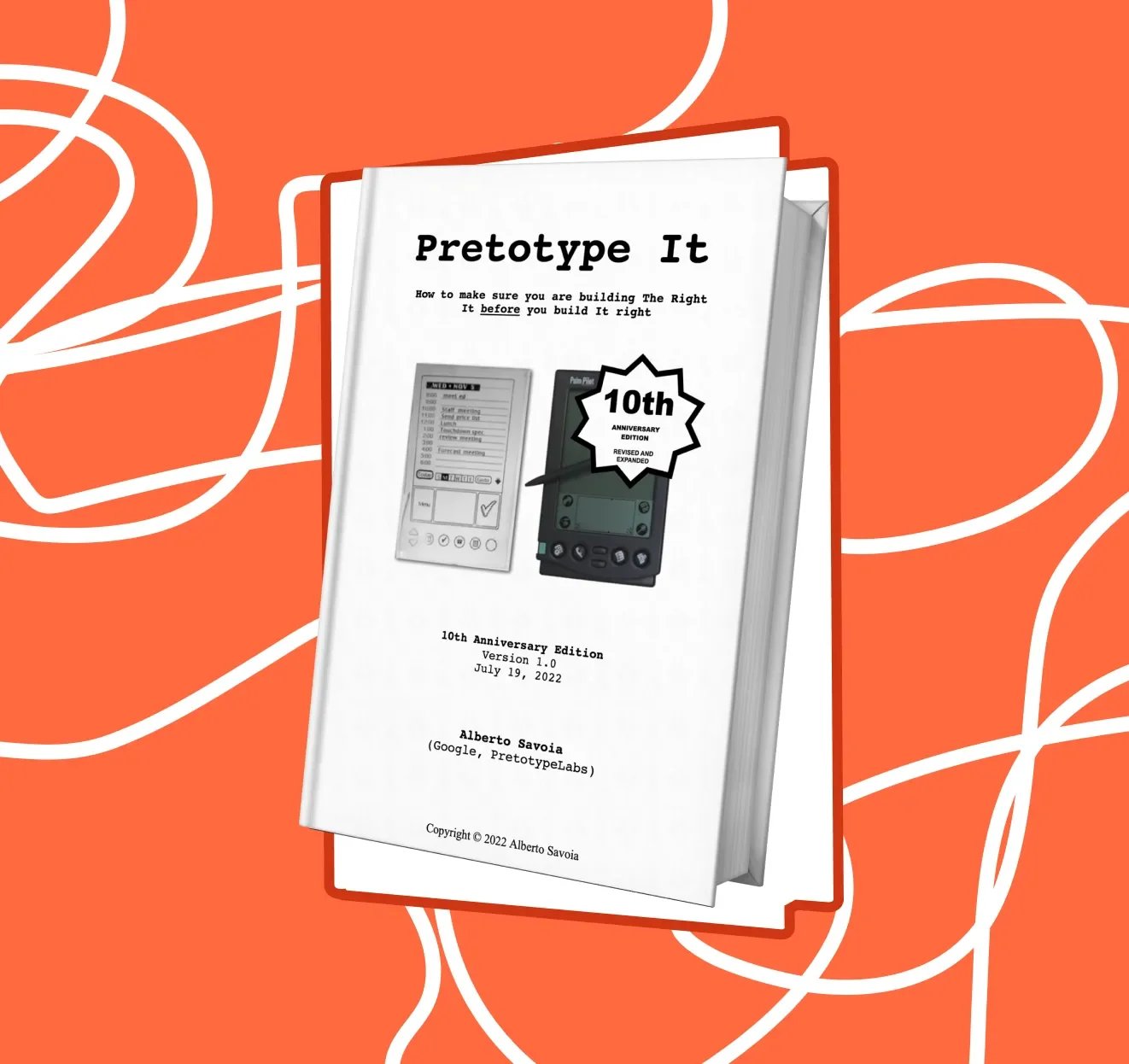
Pretotype It (Free eBook)
The original book by Alberto Savoia. 10th anniversary edition, free to download.
Ready to validate your ideas before building?
Talk to Leslie about pretotyping training, experimentation sprints, or implementing the Exponentially platform in your organisation.
Get in Touch →